From Bean or Leaf to Cup: How Disconnected Systems Compromise Coffee and Tea Quality and Safety


Coffee and tea manufacturers face a unique challenge: delivering consistent flavor, aroma, and quality across complex supply chains while maintaining strict food safety compliance. Yet many operations still rely on disconnected systems, like spreadsheets, paper logs, and point solutions, that create blind spots, slow response times, and introduce unnecessary risk.
Let's explore why this fragmented approach is holding the industry back, and how modern manufacturers are solving these problems.
The Coffee and Tea Manufacturing Challenge
The coffee and tea industry operates under relentless pressure. Retailers and consumers demand consistency. Regulators enforce strict FSQA and GFSI standards. Suppliers span multiple countries and regions. And margins are tight.
Manufacturers must ensure that every batch meets flavor and quality specs while proving compliance at every stage: from supplier qualification through roasting, blending, grinding, packaging, and distribution.
That's a lot of moving parts.
Three Core Pressures
Complexity in the supply chain.
You work with dozens (sometimes hundreds) of suppliers across different geographies. Each supplier needs monitoring, documentation, and periodic audits. When one supplier's batch has a quality issue, you need to know immediately which lots were affected, which customers received them, and if you are able to trace back quickly enough to prevent damage.
Consistency under scale.
As operations grow, maintaining consistent flavor profiles becomes exponentially harder. Roasting parameters drift, blending ratios shift, and quality specs get interpreted differently across facilities or shifts without a single source of truth. When this happens inconsistency creeps in.
Compliance visibility.
It’s no secret that food safety audits are getting tougher. Auditors now expect evidence of corrective and preventative actions (CAPAs), supplier management, allergen controls, and traceability; and they expect it documented and readily available. Scrambling to compile scattered records during an audit is both inefficient and risky.
Why Current Systems Fall Short
Many manufacturers still operate with systems that were built for smaller, simpler operations. Let's look at what goes wrong.
Paper Logs and Spreadsheets Create Blind Spots
Paper and spreadsheets are easy to start with. They're flexible. They feel familiar. But they create massive problems at scale:
- No real-time visibility. Data entry happens hours or days after the event. By the time a quality issue is logged, it's old news and tracing back to root cause is already harder.
- Manual entry errors. Humans make mistakes. Temperature readings get transposed. Supplier names get misspelled. One typo in a lot code and traceability breaks.
- No enforced standards. One shift logs data one way, another shift logs it differently. Quality checks get skipped because there's no system reminder. Compliance gaps widen.
- Audit nightmares. When an auditor asks "show me all corrective actions for the last 6 months Q3," you're hunting through spreadsheets and emails. Finding everything and proving nothing got missed is nearly impossible.

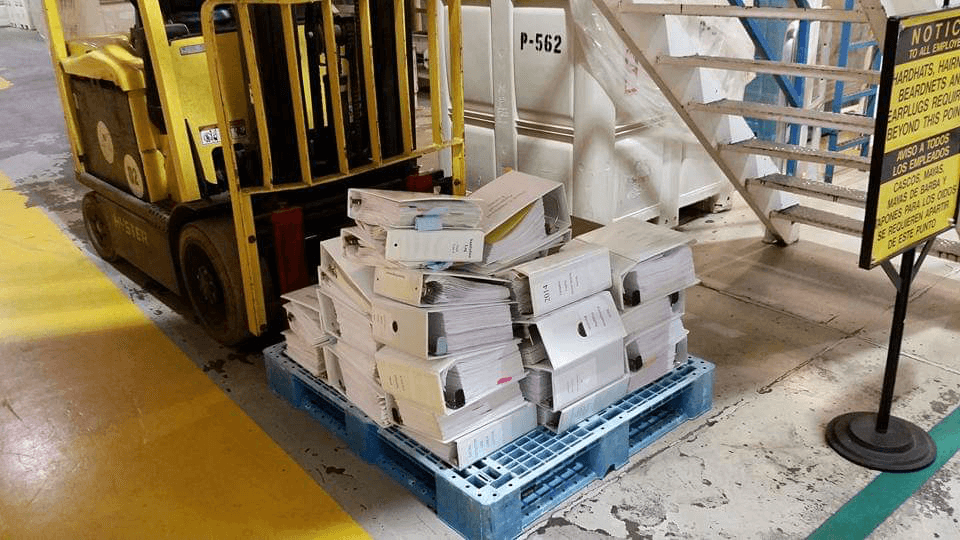
Image note: An image from before SafetyChain Software was implemented at Nichol’s Farms. Discover how Nichols Farms was able to get their whole plant to buy into an FSQA strategy.
Point Solutions Create Silos
Some manufacturers have invested in individual point solutions: one system for quality, another for supplier management, a third for production scheduling. The problem? They don't talk to each other.
- A quality issue in the lab doesn't automatically notify production or suppliers.
- Supplier audit data lives separately from purchase orders and batch records.
- When a corrective action is issued, there's no visibility into whether it was actually implemented on the plant floor.
You end up spending more time moving data between systems than actually using the data to improve.
Delayed Response = Delayed Action
In food and beverage, speed matters. If a supplier batch fails testing, you need to know which customers it shipped to, now. If a roasting parameter is drifting, you need to catch it before 10,000 bags of inconsistent product leave the facility.
Disconnected systems introduce delay at every step. That delay costs money, reputation, and compliance risk.
How Modern Manufacturers Are Solving This
Forward-thinking coffee and tea manufacturers are moving toward unified systems that embed quality, food safety, production execution, and supplier compliance into a single platform.
Here's what that looks like in practice:
Real-Time Visibility Across the Entire Operation
A modern system captures data at the point of activity, not hours later. A roasting parameter is logged in real-time. A supplier test result is recorded instantly. A quality check is completed on a mobile device on the plant floor, not transcribed into a spreadsheet that night.
This means:
- Issues surface immediately. If a batch fails a test, the right people know within minutes, not hours.
- Traceability becomes automatic. You don't need to manually trace lot codes through spreadsheets. The system knows exactly which suppliers, batches, and customers are connected to any given issue.
- Data integrity improves. Because data is captured once, at the source, errors are caught and corrected immediately.
Corrective and Preventative Actions Embedded in Daily Work
The best systems don't just log problems, they drive solutions. When an issue is identified, the system prompts the right corrective action, assigns it to the right person, and tracks it through to completion.
For coffee and tea manufacturers, this means:
- Fast root cause analysis. When a flavor inconsistency is detected, the system pulls related data, like supplier batches, roasting parameters, color and grind size results, environmental conditions, to help identify the root cause faster.
- Preventative triggers. If a supplier's defect rate is creeping up, the system flags it automatically. Before you have a crisis, you have a conversation with that supplier.
- Compliance evidence. Every corrective action is documented, timestamped, and linked to the incident that triggered it. When the auditor asks about your CAPA process, you have a clear, auditable trail.
Unified Supplier and Quality Management
Modern systems bring supplier data, quality metrics, and compliance records into one place. This enables:
- Supplier scorecards that show quality, on-time delivery, and compliance trends over time.
- Automated audit workflows that guide you through the audit process and consolidate findings in one place.
- Risk-based prioritization so you're monitoring your highest-risk suppliers most closely.
Scalability Without Sacrifice
As operations grow, a unified system scales with you. Whether you're managing one facility or five, one supplier network or multiple regions, the system adapts. Quality specs, compliance requirements, and corrective actions stay consistent, but execution remains flexible to each facility's needs.
Why This Matters for Your Bottom Line
Beyond compliance and risk, unified systems deliver real business value:
- Faster issue resolution reduces waste and customer complaints.
- Better supplier relationships come from consistent, data-driven feedback instead of surprises during audits.
- Consistent product quality builds brand reputation and reduces returns.
- Audit readiness cuts the time and stress of regulatory inspections and reduces the risk of findings.
Death Wish Coffee ran 30 people, zero SQF experience, and paper logs everywhere.
They hit a 99% compliance rate, cut waste by 76%, and landed Walmart without adding headcount. Your operation can do the same.
Getting Started
If your operation still relies on spreadsheets and point solutions, the gap between where you are and where you could be is significant. The good news? Making the move is more achievable than many manufacturers think.
The first step is understanding your current pain points. Where are your biggest blind spots? Where do issues linger or repeat? Where is compliance visibility weakest?
If you're facing challenges with supplier traceability, quality consistency, or audit readiness, a modern quality and food safety management system can transform how your operation works. Many coffee and tea manufacturers have found that moving to a unified platform not only solves immediate problems but opens the door to continuous improvement across the entire operation.
The future of coffee and tea manufacturing isn't built on spreadsheets. It's built on systems that turn data into action.


