Your quality program probably looks solid on paper: the hazard analysis is documented, the preventive controls are defined, and the supplier specs are on file. I've seen programs like that fail anyway, because the gap between a strong program and a serious incident rarely sits in the documentation. It sits in visibility, decision-making, and culture at every stage between a farm and a finished meal.
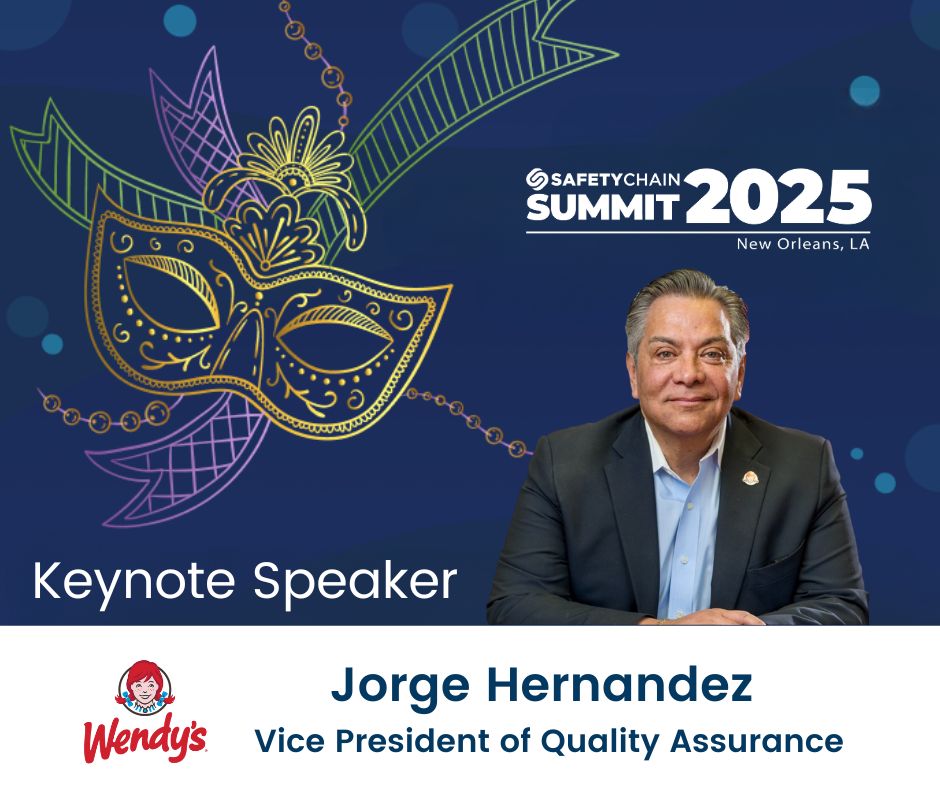
That gap was the subject of my keynote at the 2025 SafetyChain Summit. If you weren't in the room, here's what I covered and what I'd take back to your team.
If you'd rather hear from practitioners in person, SafetyChain's annual customer and industry conference, ChainReaction, returns October 18-20, 2027, in San Diego.
TL;DR
Food safety fails in the gaps between stages, so build your program around the whole path from farm to customer. The short version of my keynote:
- Regulations set a floor. Base your decisions on science and risk assessment, and build preventive controls around what that assessment finds.
- Manage risk at every stage, including the ones you don't control, and choose suppliers for capability as well as cost and availability.
- Use data to make decisions every day. Don't wait for an incident to review it.
- Build a food safety culture that belongs to the whole organization, and train every partner in your supply chain.
- Change is the only constant, so build the culture, data infrastructure, and leadership to adapt.
Why Wendy's supply chain is a useful mirror for yours
I opened with scale. Wendy's operates more than 7,250 restaurants in 33 countries, and we work with more than 500 suppliers in the US alone. Wendy's and our franchisees employ more than 240,000 people, about 70% of them Millennials or younger, and our restaurants run in 10 languages.
Those numbers matter to you if you're a food and beverage manufacturer supplying food service, retail, or distribution networks. The handoffs multiply, the regulatory environments diverge, and a mistake at one stage lands on every stage after it.
I frame the challenge in four categories that every quality leader in this environment manages at once:
- Supply chain complexity: the number of actors, geographies, and handoffs between production and consumption compounds risk.
- Food safety risks: every stage, from farm through processing, distribution, food service, and consumption, carries its own hazards.
- Regulations and standards: requirements change, and they differ by market. FDA keeps updating guidance under FSMA, including new preventive controls requirements. On traceability, the July 2028 compliance date means you should expect to ask your suppliers for traceability records and confirm they can produce them.
- Emerging risks: pandemics, geopolitical tensions, and supply chain disruptions can interrupt production, shift demand, and change what resources you can get. I treat these as quality problems with operations implications, and I'd encourage you to do the same.
Where my perspective comes from
My background spans local and state health departments, work with the FDA and CDC, and industry training through NRA ServSafe. I've also worked as a supplier, a manufacturer, a private label producer, and a distributor, and I've run my own food business in Indian food. I've seen food safety fail from almost every angle the supply chain offers.
That's why I treat supplier selection as a primary risk lever. I've been the supplier and I've managed suppliers, so I know what a good partner looks like from both sides of the table.
The risk lives at every stage, including the ones you don't control
Most organizations manage risk at the stages they control and assume someone else is handling the rest, and that assumption is where programs fail.
If you process or manufacture food, the risk your customers inherit from you depends on your controls and on your ingredient supply. If temperature control fails downstream of your facility, it's still your product and your brand, whether it's on your truck or someone else's. Not knowing what happens past your shipping dock doesn't protect you.
I put particular weight on supplier selection as the main upstream lever. A good supplier partner meets your specification today and also has the systems, culture, and capability to hold quality as conditions change. Choose for that capability, and look past cost and availability. That's how mature programs stop problems before they reach your receiving dock.
The framework: five principles for science-based food safety
The core of my keynote was a best-practice framework built on five principles. I'd take it back to your leadership team.
- Science-based decision-making. Regulations set a floor, and science tells you where the real risk lives. If your team's main reference is the regulatory checklist instead of an actual hazard analysis, your program has gaps that audits won't show you until something goes wrong. Science-based organizations use risk assessment to stay ahead of yesterday's risk profile.
- Risk assessment. Identify and evaluate threats systematically, using global data to judge likelihood and impact. HACCP is the foundational tool here. It's a starting point for risk management and doesn't cover the whole job.
- Preventive controls. I stressed prevention over response throughout the keynote. Build your controls around what your risk assessment finds, and don't stop at the minimum regulatory requirement. That is what separates organizations that consistently produce safe food from those that respond well after problems emerge.
- Farm-to-consumer view. If you see your food safety program as covering the four walls of your facility, you have a structural blind spot. Your controls reach supplier qualification and what happens after your product ships.
- Use of data. Treat data as a decision input at every stage of the supply chain, well beyond the reporting you do inside your own operations.
Use your data to make decisions
This is where the framework moves from principle to practice, and where mature and immature quality programs look most different. If your organization isn't building the ability to collect and analyze data across your supply chain, you're falling behind.
I also pointed to AI as a tool that changes how leading organizations process that data, spotting patterns and flagging anomalies faster than manual review can. Whether you can use it depends on whether your data is clean and consistent enough to mean something.
Most plants already collect the data; the harder part is using it while a deviation is developing, before the decision window closes at the end of the shift. If you only review data when something goes wrong, you're running a crisis response program with better paperwork. Your process data controls need to support review every day, so you aren't left investigating after the fact.
Culture is what makes the program work
In the continuous improvement part of my keynote, I moved past process and into how people behave. The goal I push for is a food safety culture where the behaviors and decisions that produce safe food are built into the whole organization and don't sit only in the quality department.
Three things I'd carry into your program planning:
- Training is a supply chain responsibility. If your suppliers, distributors, or franchisees don't understand your food safety expectations and the reasoning behind them, your program is only as strong as your least-trained partner.
- Review your data on an ongoing basis. Teams that review quality and safety data only after a problem are always behind. Ongoing review is how teams catch issues early.
- Treat a global perspective as baseline. If you source from international suppliers or operate across jurisdictions, use global data to assess likelihood and impact systematically. That's the minimum for your program.
The leadership model: know it, be it, lead it
I closed with the personal leadership model I use:
Know the Business. Be the Business. Lead the Business.
Knowing the business means understanding where your risks live and how quality connects to financial and operational performance. Being the business means getting into operations deeply enough that food safety becomes a shared responsibility. Leading the business means shaping how your organization thinks about risk, building capability across functions, and creating systems that keep improving.
The difference between leading and managing matters to me. Managing food safety means monitoring compliance and responding to deviations. Leading it means building the culture and capability so compliance follows without constant effort.
My closing point was that change is the only constant. Regulations will shift, supply chains will be disrupted, and new hazards will emerge. The organizations that hold food safety excellence have the culture, data infrastructure, and leadership to adapt. A thicker compliance binder won't get you there.
Four questions to take back to your team
If you lead quality, food safety, or operations at a food and beverage manufacturer, ask your team these four questions:
- Are your risk assessments science-based or compliance-based? If your main reference is a regulatory checklist, you probably have gaps that audits won't surface until something goes wrong.
- Do you have real visibility from your suppliers' operations through to how your customers handle your product? Most quality programs are strong inside the plant and weak at the edges.
- Is your data infrastructure a reporting tool or a decision-making tool? Using data to spot risk trends before they become incidents, continuously, is what builds resilience.
- Does food safety culture belong to your quality department or to your whole organization? That answer will predict your program's performance better than any audit score.
If any of those questions surfaces a gap, SafetyChain supports food and beverage manufacturers in building the data infrastructure and supplier compliance systems that turn episodic review into continuous visibility, including CAPA management workflows that close the loop on supplier non-conformances.
Frequently asked questions
It treats food safety as a responsibility that runs from farm production through processing, distribution, food service, and consumption, and not only inside your own facility. You assess risk at each stage, including the ones you don't control, and you choose suppliers and build controls with that full path in view.
Regulations set a floor, and science tells you where the real risk lives. A program built around a regulatory checklist can have gaps that audits won't surface until something goes wrong. Risk assessment and preventive controls based on your actual hazards keep you ahead of the problem.
They are science-based decision-making, risk assessment, preventive controls, a farm-to-consumer view, and use of data. Together they move your program from checking regulatory boxes to finding and controlling the real risks in your supply chain before they become incidents.
Select for capability as well as cost and availability. A strong supplier meets your specification today and has the systems, culture, and ability to hold quality as conditions change. Supplier selection is the main upstream risk lever in my framework.
Use data as a decision input at every stage of the supply chain and review it continuously, so you catch a developing deviation before the decision window closes. AI can spot patterns and flag anomalies faster than manual review, but only if your data is clean and consistent.
Managing means monitoring compliance and responding to deviations. Leading means building the culture and capability so compliance follows without constant effort. I use a simple model for it: know the business, be the business, and lead the business.
Hear from more practitioners
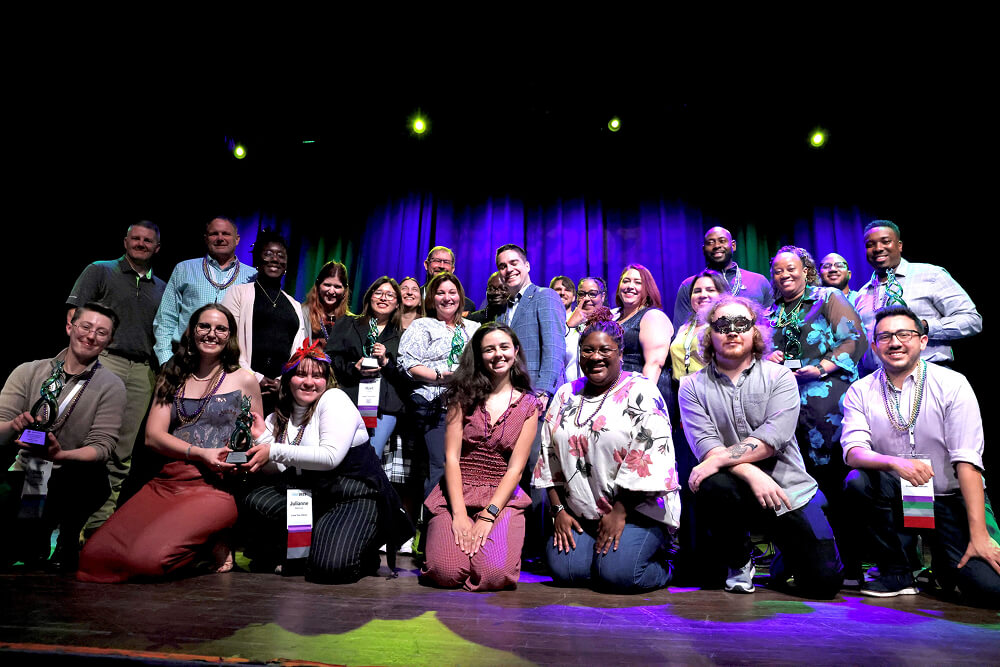
I shared this framework with quality and operations leaders at the 2025 SafetyChain Summit. If you want more of that kind of peer exchange in person, plan ahead for ChainReaction, SafetyChain's annual customer and industry conference. ChainReaction 2027 takes place October 18-20 in San Diego. Visit the ChainReaction website to see what's planned.