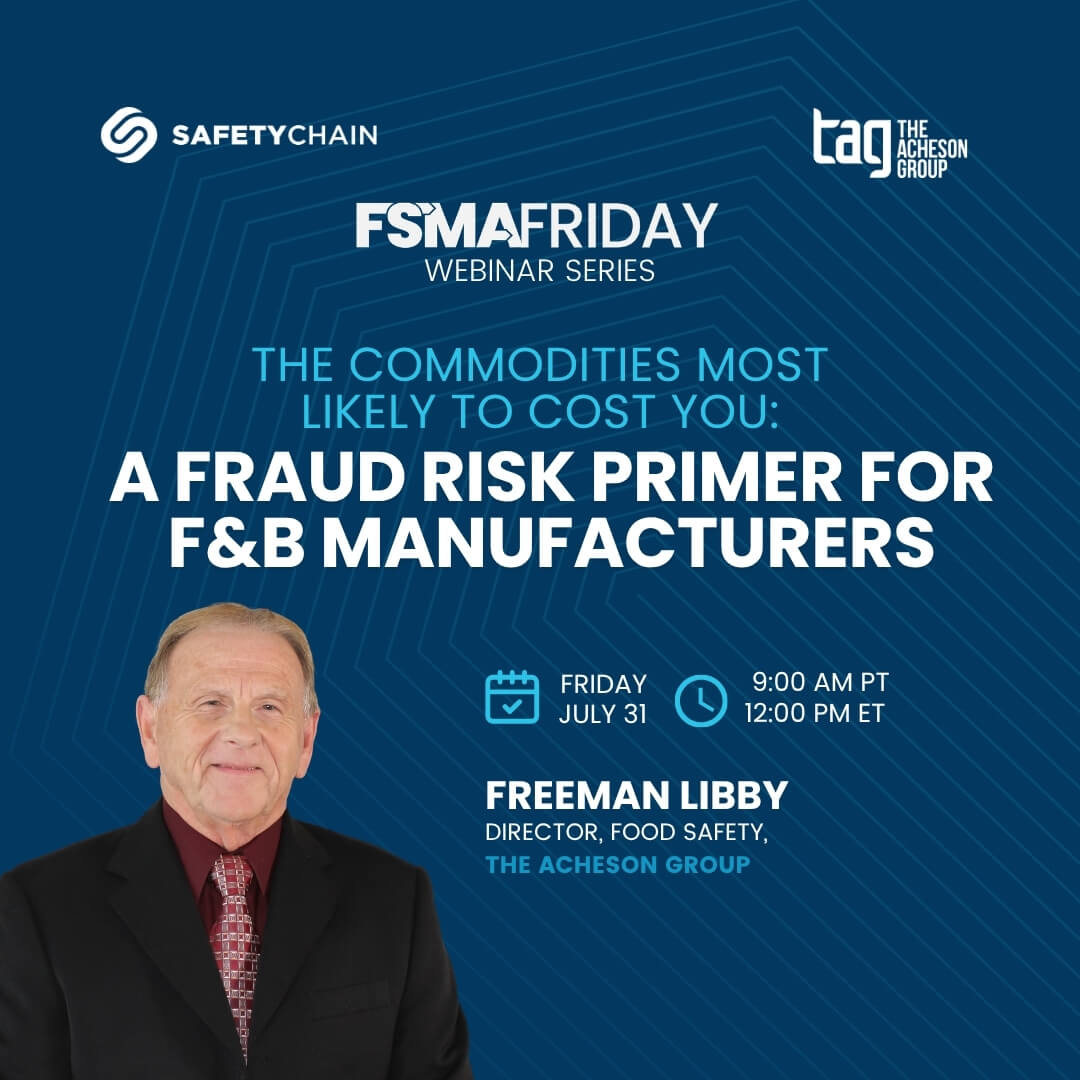
The Commodities Most Likely to Cost You: A Fraud Risk Primer for F&B Manufacturers
Loading registration form...

About This Session
Food fraud isn't new, but adulteration methods are getting more sophisticated and enforcement remains reactive. Most manufacturers only discover a supplier integrity problem after the damage is done, often during an audit or after a recall. This session is designed to help FSQA and operations teams understand the risk before it becomes their problem.
What You'll Learn
What You'll Learn
- Which ingredients are most commonly adulterated: The specific commodities where substitution and dilution are most prevalent, and what to watch for.
- What food fraud actually costs your operation: Beyond ingredient overpayment, the real exposure sits in recalls, rework, brand damage, legal liability, and how those risks compound.
- How FDA defines Economically Motivated Adulteration: What 21 CFR Parts 117 and 507 require from your food safety program, and where most facilities have gaps they don't know about.
- Why detection is harder than it looks: The practical challenges of cost of testing, foreign supplier oversight, and the limits of documentation that make EMA a persistent problem even for compliant operations.
Meet the Speaker
Freeman Libby
Director, Food Safety, The Acheson Group
Freeman brings more than 45 years of experience across food safety regulation, supply chain management, and 3rd-party auditing. His background spans the Canadian Food Inspection Agency, international import/export operations across multiple countries, and over 200 BRCGS and FSSC 22000 audits. He holds PCQI certification and has worked extensively with seafood, protein, and commodity ingredients, the categories where food fraud risk runs highest and is hardest to detect.
Don’t Miss This Session on Food Fraud Risks
Register Now